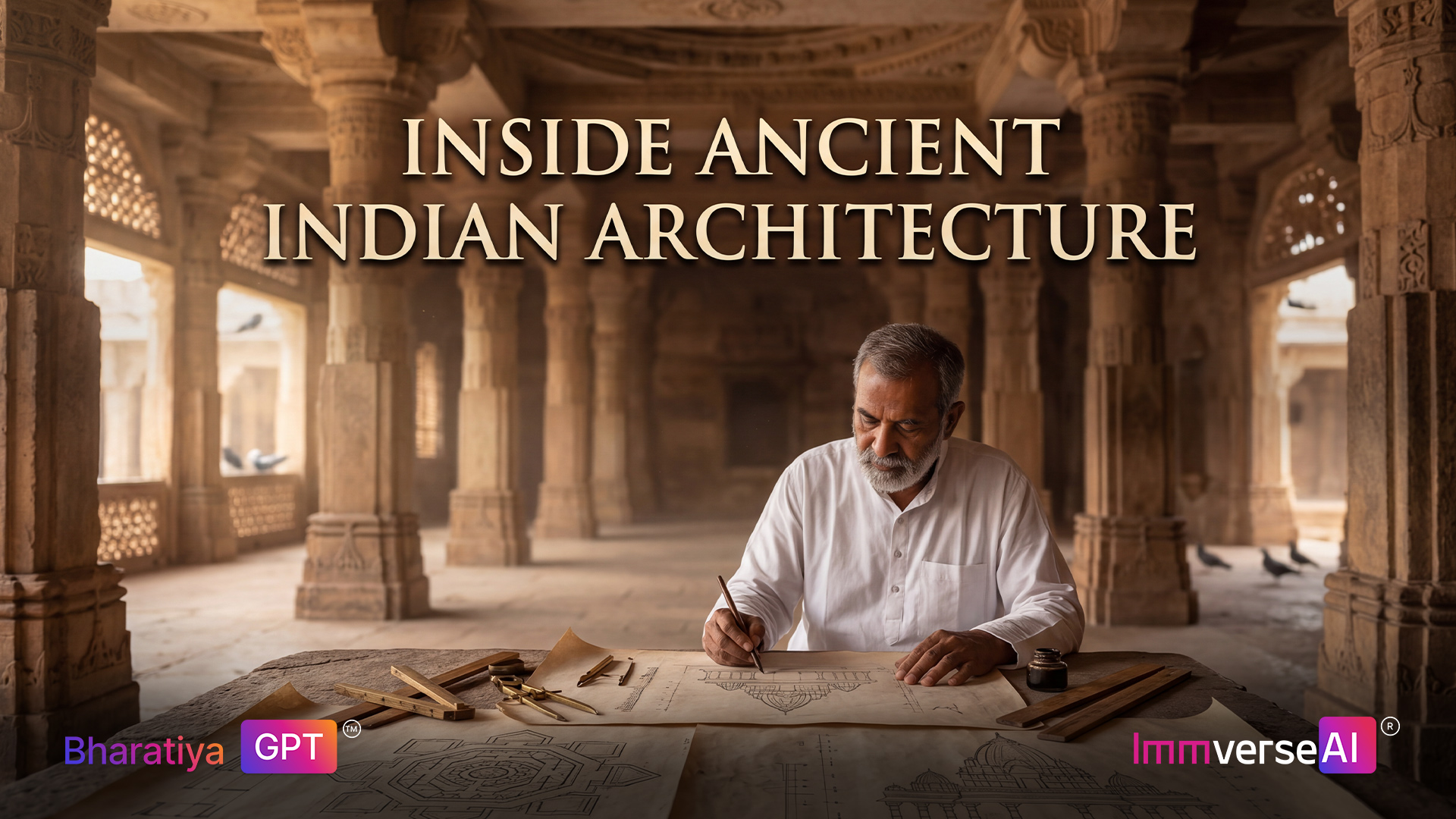

Have you ever walked through an old temple or visited a historical city and felt something special about the place? It’s not just the beauty, it’s the design. Ancient Indian architecture wasn’t just about buildings; it was about creating spaces that told stories, connected people with nature, and they were even based on science. From the intricate temples to the well-planned cities, these structures were a perfect blend of art, science, and cultural heritage that continues to influence modern design today. Let’s explore how the principles behind these architectural wonders are being rediscovered to shape the cities of tomorrow.
Indian Cities of the Past: A Blueprint of Urban Design
Imagine living in a city where every street and building seemed to make life easier. Ancient Indian cities like Mohenjo-Daro, Lothal, and Hampi weren’t just places to live, they were designed with care to make daily life more efficient and comfortable. The streets were laid out in a grid pattern, ensuring easy navigation, while buildings were aligned to let in light and natural air, keeping the temperature just right.
Water was another key focus. These cities had sophisticated systems for managing water like well-planned drainage, wells, and reservoirs to make sure that residents always had access to clean water and that waste was taken care of. In a world where we’re facing water shortages, these ancient practices are a reminder of how careful design can ensure sustainability.
Temples and Palaces: Architecture as a Gateway to the Divine
The temples of Bharat, like those at Konark, Khajuraho, and Meenakshi, are more than just beautiful, they are marvels of design. Every carving, every stone, and every curve was placed with purpose. These temples were designed to represent the cosmic order, aligning with celestial bodies and natural elements, creating a sense of spiritual connection.
But these structures weren’t just about the divine, they were also known for their architectural brilliance and mysteries! You can check out our AI-powered course on the Brihadeeswara Temple to know some of its astonishing mysterious facts!
The Influence of Indian Architecture on Modern Design
You might not always notice it, but the principles of ancient Indian architecture are still shaping modern buildings. Today’s architects are drawing inspiration from the geometry and symmetry of temples to create designs that are not only beautiful but also sustainable. Courtyards, natural ventilation, and passive cooling are becoming key elements in buildings designed for hot climates, just as they were in ancient times.
Even as we rely on modern materials like steel and glass, the lessons of ancient water management systems and eco-friendly design are being integrated into today's green buildings. It’s a reminder that sustainable living isn’t new, it’s something that’s been built into the fabric of our cities for centuries.
How India’s Past is Shaping the Future of Architecture and Urban Planning
The more we look at India’s ancient architecture, the more we realize how much it can teach us about building cities that are sustainable and people-friendly. The careful planning of ancient cities, the integration of nature, and the focus on comfort and well-being offer important lessons for the future.
As the world faces new challenges, blending modern needs with the wisdom of the past can help us create cities that are not only functional but also harmonious with the environment. Imagine a future where our cities are as thoughtfully designed as those in ancient India.
It’s a future that’s within reach, if we look to the past for inspiration.
.png)
.png)
.png)