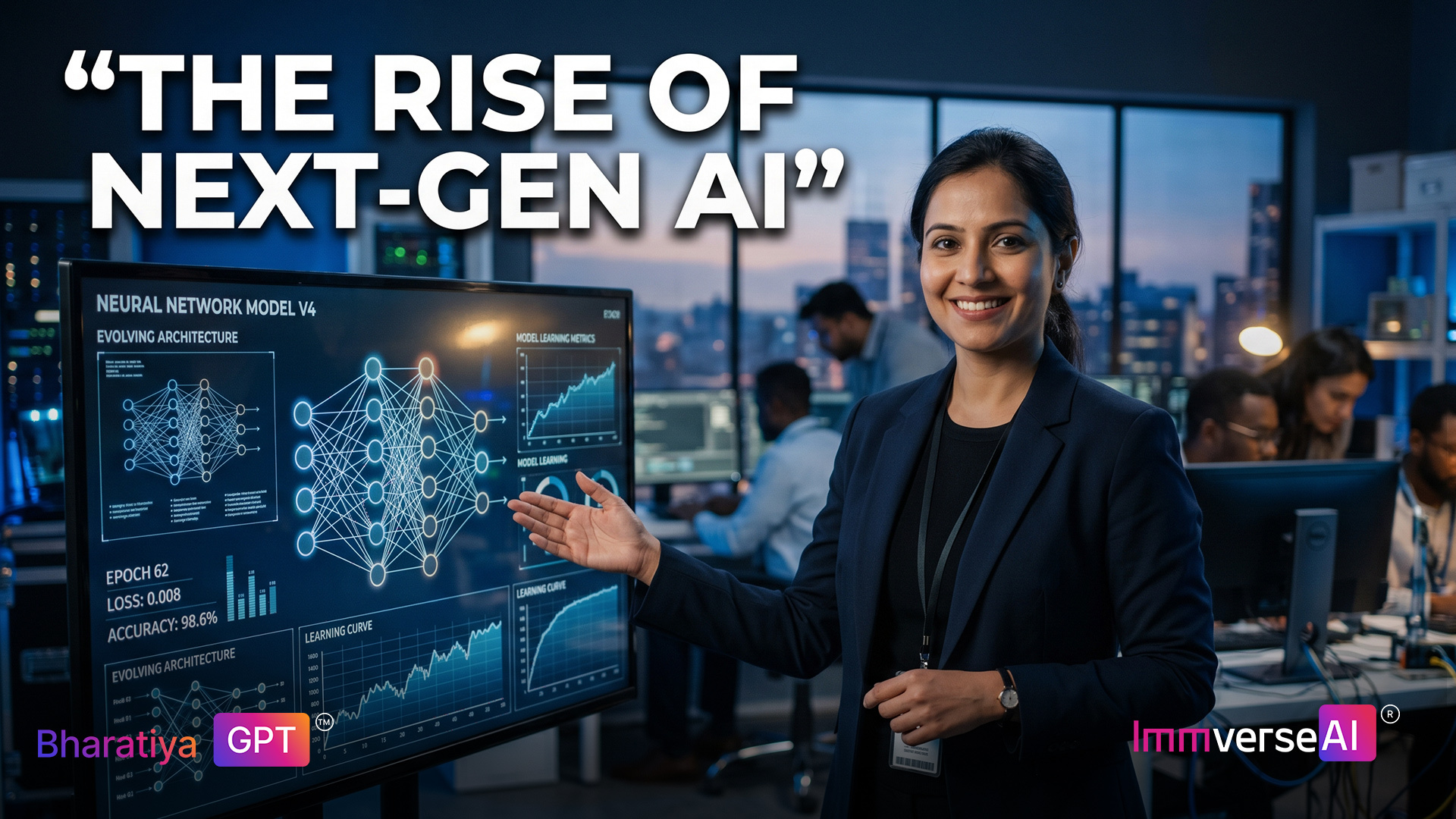

Artificial Intelligence (AI) has moved from a futuristic concept to a transformative force in our everyday lives, from autonomous vehicles to hyper-targeted app recommendations. But how do machines learn to do all this? The answer is Machine Learning (ML) — a collection of techniques that help AI evolve and improve over time. Let’s dive into the core learning methods driving AI’s evolution: Supervised Learning, Unsupervised Learning, Semi-Supervised Learning, and Reinforcement Learning.
Supervised Learning: Where AI Gets Its A+
Supervised Learning is like a structured study session for AI. The machine is trained on labeled data, where each input is paired with the correct output, allowing it to recognize patterns and improve predictions. This technique powers everyday AI applications like facial recognition, email filtering, and medical image analysis. By learning from labeled examples, AI becomes highly accurate in performing specific tasks.
Unsupervised Learning: The Insight Seeker
Unsupervised Learning removes the constraints, allowing AI to explore vast amounts of unlabeled data. Instead of labeled data, we let it roam free, sifting through vast amounts of raw information. Without predefined answers, AI identifies hidden patterns and clusters on its own. This technique is key for applications like recommendation engines or detecting anomalies in network traffic. By enabling AI to discover insights autonomously, Unsupervised Learning boosts its ability to adapt to new, complex situations.
Some of the key Unsupervised Learning algorithms include clustering and dimensionality reduction techniques, which help discover relationships within unlabeled datasets.
Semi-Supervised Learning: The Best of Both Worlds
In the real world, we rarely get everything handed to us on a silver platter, and neither does AI. Enter Semi-Supervised Learning — the hybrid approach. AI is given a small amount of labeled data and a vast pool of unlabeled data to learn from. The combination of structured input and self-discovery makes this technique more efficient. Semi-supervised learning methods power applications that require speed and accuracy, like image classification and voice recognition. This method provides a balance between the precision of supervised learning and the flexibility of unsupervised learning.
Reinforcement Learning: The Continuous Improver
Reinforcement Learning is like teaching a child how to ride a bike: they fail, they learn, and they keep getting better. In this model, the AI interacts with an environment and makes decisions. It receives feedback in the form of rewards or penalties, based on whether its actions are beneficial or detrimental. Over time, the AI refines its strategy, improving performance. This trial-and-error process is behind systems like self-driving cars, gaming bots, and robotics, where continuous improvement is essential for success. Reinforcement learning allows AI to learn in dynamic and complex environments, optimizing its behavior over time.
Smart, Smarter, Smartest: AI’s Journey into Tomorrow
As AI evolves, so too do its learning capabilities. Quantum Computing, Edge AI, and Natural Language Processing (NLP) are accelerating the way machines learn and interact with the world. AI is reshaping industries and society, unlocking boundless potential while presenting critical ethical challenges. Grasping the core learning methods—Supervised Learning, Unsupervised Learning, Semi-Supervised Learning, and Reinforcement Learning—empowers us to better understand AI’s transformative impact. These techniques lay the foundation for a future where machines not only learn but evolve to enhance our world.
.png)
.png)
.png)