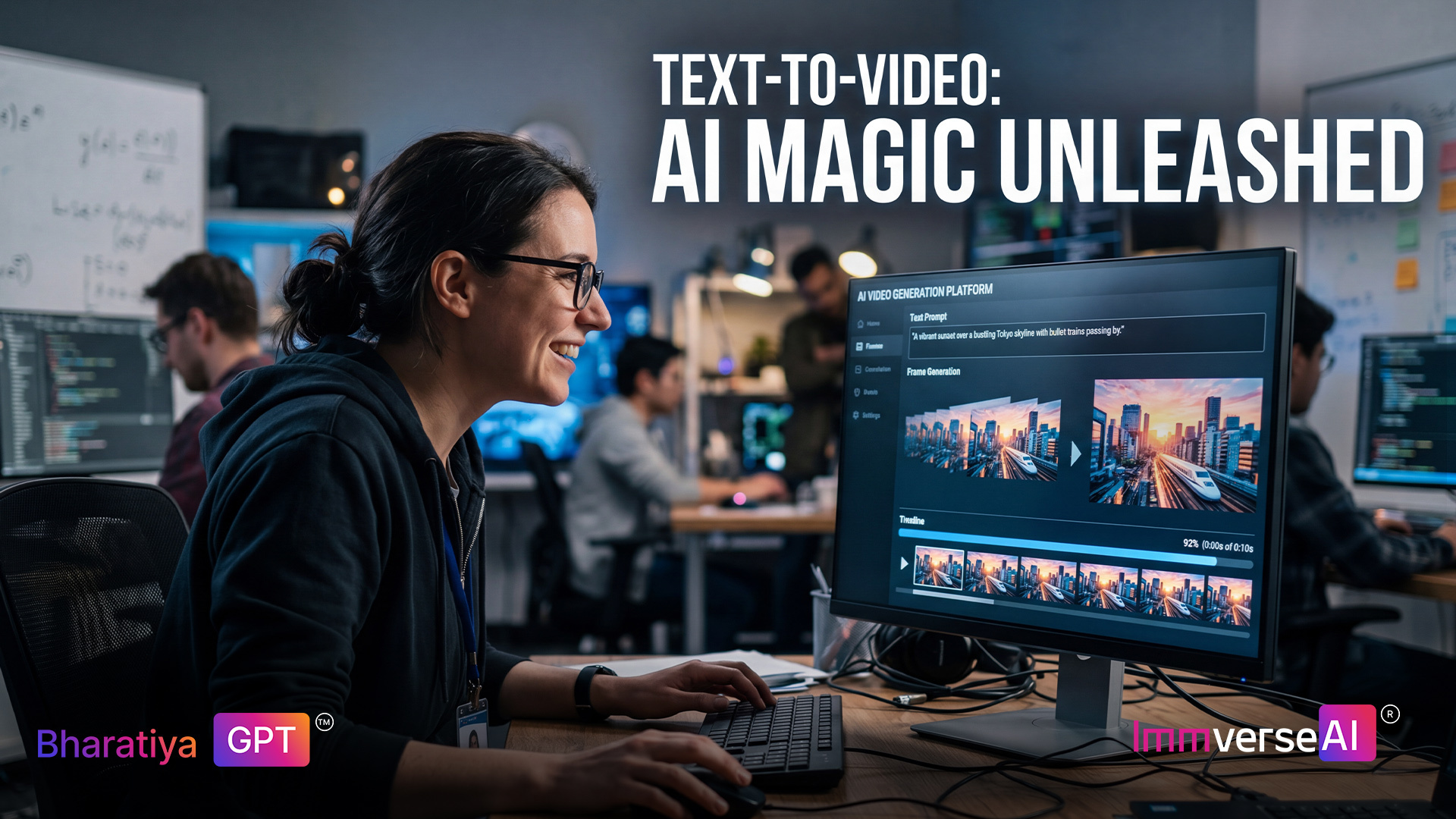
What if you could type a few words and, just like that, watch a video unfold in front of you? No actors, no cameras, just the power of AI technology turning your input text into moving images. Sounds like something out of a sci-fi movie? It’s happening right now with Video Generation, and it's called text-to-video model. Curious how it works? Let’s dive in and explore the magic or better to say science behind the scenes.
From Words to Numbers: The First Transformation
Imagine typing a sentence like, "A fox running through a snowy forest at dawn." How does AI technology even begin to understand that? The first step is a bit surprising: it turns words into numbers. Why? Well, computers don’t understand language the way humans do as they speak in numbers. So, the system breaks down each word into a series of mathematical representations, known as embeddings, that capture the representation of the words. This allows the AI to understand relationships, like knowing that a ‘fox’ is an animal, and ‘snowy’ describes the scene. Once that’s done, the AI is ready to build your video.
From Numbers to Images: Crafting the Visuals
Now that the AI understands the words, it needs to turn those numbers into images. But here's the catch: it can’t just generate one static picture, it has to bring those images to life. For example, the fox in your sentence can’t just be a static image; it has to run, interact with the environment, and move fluidly across the scene. This is where popular models like Make-A-Video, GANs, and Diffusion Models come into play. These models create images by either slowly refining blurry ones (like Diffusion Models) or improving them through a feedback loop (like GANs). Each model brings a unique approach, but they all share the goal of turning input text into vibrant, high-quality visuals.
Making It Move: Creating Seamless Motion
Now comes the trickiest part: making sure those images don’t just sit still. A video is all about movement, so the AI has to ensure that the fox doesn’t suddenly jump around from frame to frame. This is where temporal consistency kicks in. The system uses optical flow to track how objects move between frames, creating smooth, realistic transitions. It’s like an invisible thread connecting the fox to the trees and snow, making sure they all move together in a natural, fluid way. The result? A high-quality video that feels like a real, moving world.
Attention to Detail: Ensuring Coherence
Ever seen a video where objects move strangely or colors shift unexpectedly? It’s jarring, right? The AI makes sure that doesn’t happen by using self-attention and temporal attention. These mechanisms help the system focus on the details of each frame (like making sure the snowflakes fall correctly) and the overall flow of the scene (like ensuring the fox stays in the right spot as it runs). This attention ensures that every element in the scene feels like it belongs to the same coherent world, both within each frame and across the entire video.
Final Check: Perfecting the Video
Once the video starts to take shape, it’s time for a crucial step: refining the content to match your original prompt. This is where CLIP (Contrastive Language-Image Pre-Training) comes in. CLIP helps the AI check that the video is aligned with your text. It evaluates whether the fox, snow, and forest all match the scene you described. If something doesn’t fit, CLIP asks the system to adjust until everything feels just right. It's like having a second set of eyes to make sure the story is told accurately. This quality control ensures that the final video meets the expectations of the input text.
The Future of Creativity: Endless Possibilities
So, what does all of this mean? Well, text-to-video AI is opening up new frontiers for creators everywhere. Whether you’re a filmmaker, educator, marketer, or social media influencer, you can now produce videos just by typing out a description. It’s a tool that’s going to make creativity faster, easier, and more accessible to everyone. The technology is improving every day, with reported results showing better quality and faster video creation.
.png)
.png)
.png)