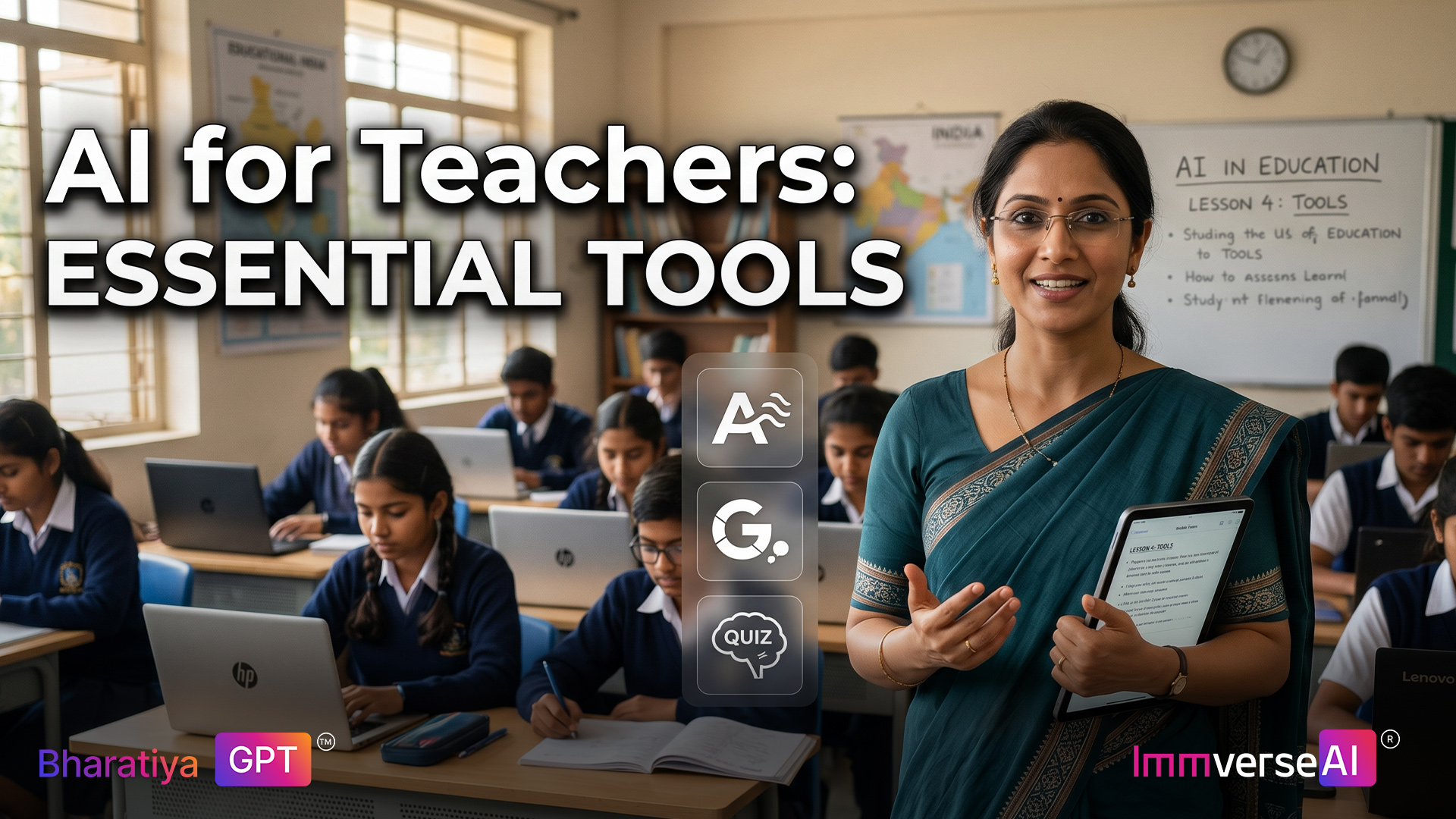

From automating routine tasks to unlocking new ways to engage students, AI tools for teachers are reshaping educational technology. Whether you teach online, in person, or in hybrid settings, the right mix of lesson planning AI, teaching aids, and smart classrooms can save hours each week and elevate learning outcomes.
Lesson planning AI
Lesson planning AI can draft standards-aligned plans, suggest activities, and adapt content for different proficiency levels in minutes.
- Generate lesson objectives, essential questions, and exit tickets tailored to your syllabus.
- Auto-differentiate reading passages and tasks with multiple Lexile levels.
- Build pacing guides and weekly outlines that map to curriculum frameworks.
- Turn a topic (e.g., fractions, the water cycle) into scaffolded mini-lessons with practice sets.
Pro tip: Treat AI as a first draft. Review for accuracy, align with your context, and add culturally relevant examples to ensure plans feel authentic to your classroom.
Tools Every Teacher Should Try
Here are some famous AI tools for teachers that are making classrooms smarter worldwide:
- ChatGPT (OpenAI) – for lesson ideas, quiz creation, and simplifying concepts.
- Google Classroom + AI add-ons – to organize lessons, assignments, and grading.
- Khan Academy’s Khanmigo – an AI-powered tutor that supports both students and teachers.
- Quizizz & Kahoot! AI – create fun, interactive quizzes in minutes.
- Duolingo Max (AI-powered) – great for teaching languages with real-time feedback.
- Grammarly – helps teachers and students with clear, mistake-free writing.
- Microsoft Copilot for Education – drafts lesson content, summaries, and reports.
- Bhartiyagpt – its purpose is to provide respectful and accurate information on a wide range of topics related to Indian knowledge, cultural, historical, and philosophical contexts. It assists with structured information, clarifies queries with historical and cultural accuracy.
Smart classrooms and automation
Smart classrooms weave AI into daily routines to reduce friction and increase instructional time.
- Classroom management: Timer, noise-level, and attention tools that nudge transitions and focus.
- Attendance and analytics: Auto-mark attendance from check-ins and spot participation trends.
- Adaptive practice: Platforms that adjust difficulty in real time and surface misconceptions.
- Content streaming and casting: Seamlessly push annotated notes, polls, or examples to student devices.
Set clear norms about device use. Assign roles (tech steward, timekeeper) so the workflow supports learning rather than distracts from it
Assessment and feedback, faster
AI can accelerate assessment without sacrificing rigor.
- Rubric co-creation: Draft criteria and descriptors aligned to skills and standards.
- Quick checks for understanding: One-click formative quizzes with instant data dashboards.
- Draft feedback: Generate comments on clarity, evidence, and structure; you finalize tone and next steps.
- Academic integrity checks: Emphasize process (outlines, drafts, reflections) and use AI to flag anomalies, then discuss growth strategies.
For language-rich tasks, ask students to include metacognitive notes on how they researched and revised—this deepens learning and reduces misuse.
AI tools for teachers are most powerful when they enhance human connection. Let AI handle the repetitive tasks, so you can focus on coaching, curiosity, and community the parts of teaching no technology can replace.
.png)
.png)
.png)