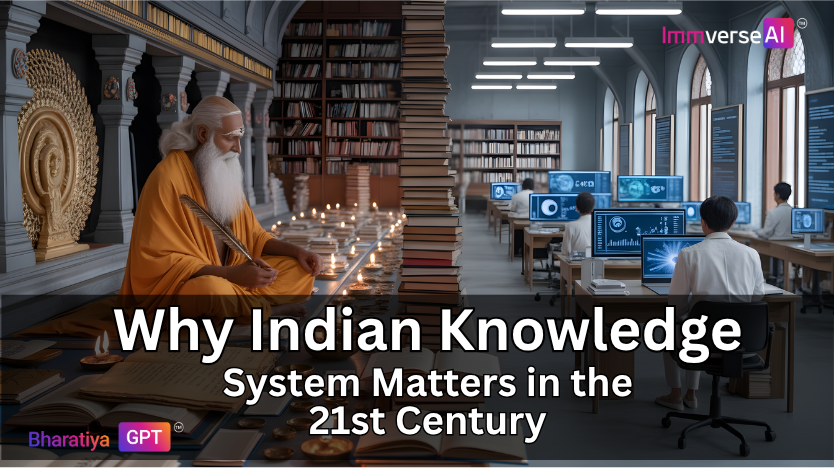

In today’s fast-changing world, we often look to modern science and technology for answers. Yet, ancient wisdom from India known as Indian Knowledge Systems (IKS) still holds deep value for solving modern problems. These systems blend science, philosophy, art, health, and ethics in ways that are highly relevant in the 21st century.
Indian Knowledge Systems are not just old ideas. They are living traditions that teach harmony with nature, human wellbeing, logical thinking, and ethical living. When combined with modern innovation, IKS can help address climate change, health challenges, ethical technology use, and education reforms.
What Are Indian Knowledge Systems?
Indian Knowledge Systems include a wide range of traditional knowledge such as:
- Ayurveda and Yoga (health and wellness)
- Mathematics and astronomy developed long before modern science
- Sanskrit grammar and logic
- Traditional farming and ecological practices
- Philosophical and ethical teachings from texts like the Upanishads and Vedas.
These systems were developed through observation, experimentation, and deep reflection over thousands of years. They offer a holistic worldview rather than separating life into isolated parts.
How IKS Helps Solve Today’s Problems
1. Sustainable Living and Environment Protection
Traditional Indian practices focused on living in harmony with nature. Ancient farmers knew how to collect rainwater, maintain soil health, and grow diverse crops that supported the land. As modern farming faces challenges like soil erosion, water scarcity, and climate damage, these practices offer sustainable solutions that help restore balance to the environment.
2. Better Health and Wellness
Systems like Ayurveda and Yoga look at health in a complete way not just treating symptoms, but balancing mind, body, and lifestyle. In the 21st century, millions of people struggle with stress, lifestyle diseases like diabetes, and mental health issues. Practices like yoga, meditation, traditional diets, and daily routines from IKS can support better health, prevention, and long-term wellbeing.
3. Strong Foundations in Science and Mathematics
India’s ancient thinkers made important contributions to mathematics, including the concept of zero and decimal numbers, and to astronomy and logic. These ideas are still at the heart of modern science and computing today. When students learn about these contributions, they gain pride and confidence in India’s scientific heritage.
4. Ethics and Technology
Today’s technology, especially Artificial Intelligence (AI) needs strong ethical direction. Indian philosophy teaches values like dharma (duty), balance, compassion, and community welfare. These values remind us that technology should serve humanity, not harm it.
An example of blending ancient wisdom with modern technology is BharatiyaGPT, an AI platform built to preserve and share India’s civilizational knowledge. BharatiyaGPT is an AI powered by a vast database of Indic manuscripts and cultural texts, enabling users to explore India’s heritage through advanced artificial intelligence. It aims to make ancient wisdom accessible in many languages and to correct cultural biases found in global AI models.
By linking to the resource https://bharatiyagpt.ai/bharatvarsha, readers can directly explore how this AI platform brings Indian knowledge into the digital age and supports modern learning and research.
5. Enhancing Education and Critical Thinking
Indian Knowledge Systems teach more than facts they teach questioning, reasoning, and debate. In ancient India, scholars from different schools discussed and debated ideas openly. Including IKS in modern education can help students learn how to think critically and with cultural awareness. This prepares them for both jobs and life.
Why IKS Matters More Than Ever
The 21st century faces many complex challenges: climate change, health crises, social fragmentation, and ethical concerns about technology. No one knowledge system can solve everything alone. That’s why Indian Knowledge Systems matter:
- They encourage balance between humans and nature
- They provide holistic health practices
- They offer ethical frameworks for technology
- They strengthen culture, identity, and confidence
When combined with modern science, IKS can help create smarter, fairer, and more sustainable solutions for individuals and societies.
How We Can Use Indian Knowledge Systems Today
To make the most of Indian Knowledge Systems:
- Include IKS in school and university curricular
- Research traditional knowledge using scientific methods
- Create digital libraries and tools (like BharatiyaGPT) to preserve and share manuscripts
- Use IKS values in leadership, policy, and innovation
Conclusion
Indian Knowledge Systems are not relics of the past they are practical, ethical, and powerful tools for the future. They remind us that progress is not just about technology, but about wisdom, balance, and wellbeing.
In the 21st century, as we navigate uncertainty and complexity, Indian Knowledge Systems matter more than ever. They can help us live healthier lives, protect our planet, and build a future that honors both tradition and innovation.
.png)
.png)
.png)