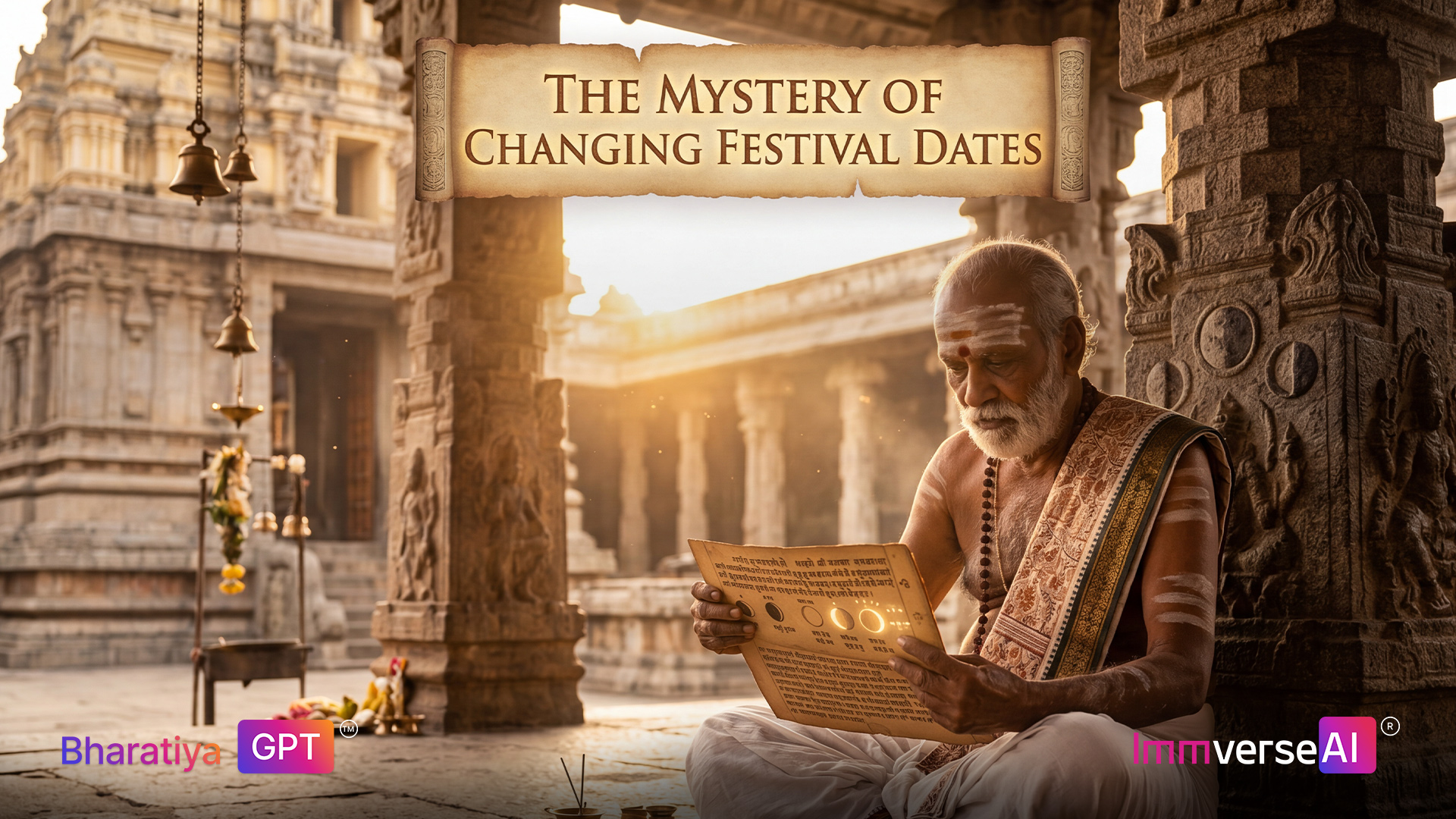
Curious to Know Why Some Festival Dates Vary Each Year?
Every year, we celebrate Pongal or Sankranti on January 14, but have you ever wondered why Diwali falls on different dates each year? The variation in festival dates is a fascinating topic that intertwines astronomy, culture, and tradition. Understanding this can deepen our appreciation for these celebrations and their significance in our lives.
The dates of many festivals are determined by the calendar system used to mark time. In India, this is primarily done through the Panchang, a traditional Indian calendar system that intricately weaves together celestial movements and timekeeping. The Panchang is more than just a calendar; it is a comprehensive guide that includes details about the days, months, and auspicious times for various activities, including rituals and celebrations.
The Origins of Timekeeping
The story of timekeeping dates back to ancient civilizations. In earlier times, humans had no structured concept of time. They lived in harmony with nature, hunting when hungry and sleeping when tired. However, as societies evolved and agriculture became essential for survival, understanding time became crucial.
Farmers needed to know when to plant seeds, water their crops, and harvest. This necessity gave rise to the concept of a calendar. Early humans began to observe natural cycles like the changing phases of the moon and the sun's position in the sky to develop a system of timekeeping.
Observing the Skies
Ancient Indians were keen observers of the skies. They noted that the Earth takes approximately 365 days to complete one orbit around the sun. This observation led to the establishment of a solar year.
As agriculture advanced, they sought smaller time markers, longer than a day but shorter than a year. They turned their attention to the moon, discovering that it takes about 30 days to complete one orbit around the Earth. This realization led to the concept of lunar months, which play a crucial role in the Bharatiya Panchang.
The Hindu Calendar Explained
By the 5th century CE, the Hindu calendar had evolved into a sophisticated system. It recognizes both solar and lunar cycles. This is reflected in the dates of various festivals throughout the year.
For instance, Diwali, one of the most significant Hindu festivals, is celebrated on the new moon day of Kartik, which usually falls between October and November. This timing is based on lunar cycles. In contrast, Makar Sankranti is celebrated around January 14 each year, marking the sun's entry into the Capricorn zodiac sign, and follows a solar calendar.
The date of Diwali varies from year to year because the lunar calendar is based on the moon's cycles, with each month beginning on the new moon. Since the lunar cycle is approximately 29.5 days, Diwali shifts annually. In contrast, Makar Sankranti occurs on a fixed date, as it is linked to the consistent solar event of the sun entering Capricorn.
Regional Calendar Variations
India doesn't just have one Panchang, it is home to about 30 regional calendar variations! For instance, much of North India follows the Vikram Samvat, while South India adheres to the Shaka calendar.
Though the months in both calendars are similar and follow the same order, the New Year begins at different points in each calendar. The Vikram Samvat calendar begins on Diwali, which is considered the New Year by many North Indians. In contrast, the Shaka calendar starts on the Vernal Equinox, when day and night are equal in length. This difference highlights the cultural diversity within India, reflecting how different regions interpret time and seasons.
Wouldn’t it be Simpler with a Unified Calendar System?
The idea of a unified calendar has been discussed for centuries, but practical challenges have made it difficult to implement. To address the complexity of multiple calendar systems, India introduced a Panchang calendar in 1957, primarily for administrative purposes.
The Panchang and the concept of time reveal a rich story of culture, science, and tradition. They help us understand how our ancestors developed a system to measure time-based on nature's rhythms. By exploring the mysteries of the Panchang and the reasons behind the varying festival dates, we can celebrate not just the events themselves but the history, science, and community that come with them.
For an in-depth look at Panchang, head to our website and check out our AI-powered video on Panchang!
.png)
.png)
.png)